
Beyond the Rubble: Artificial Islands Could Give Gaza a Future
- Author
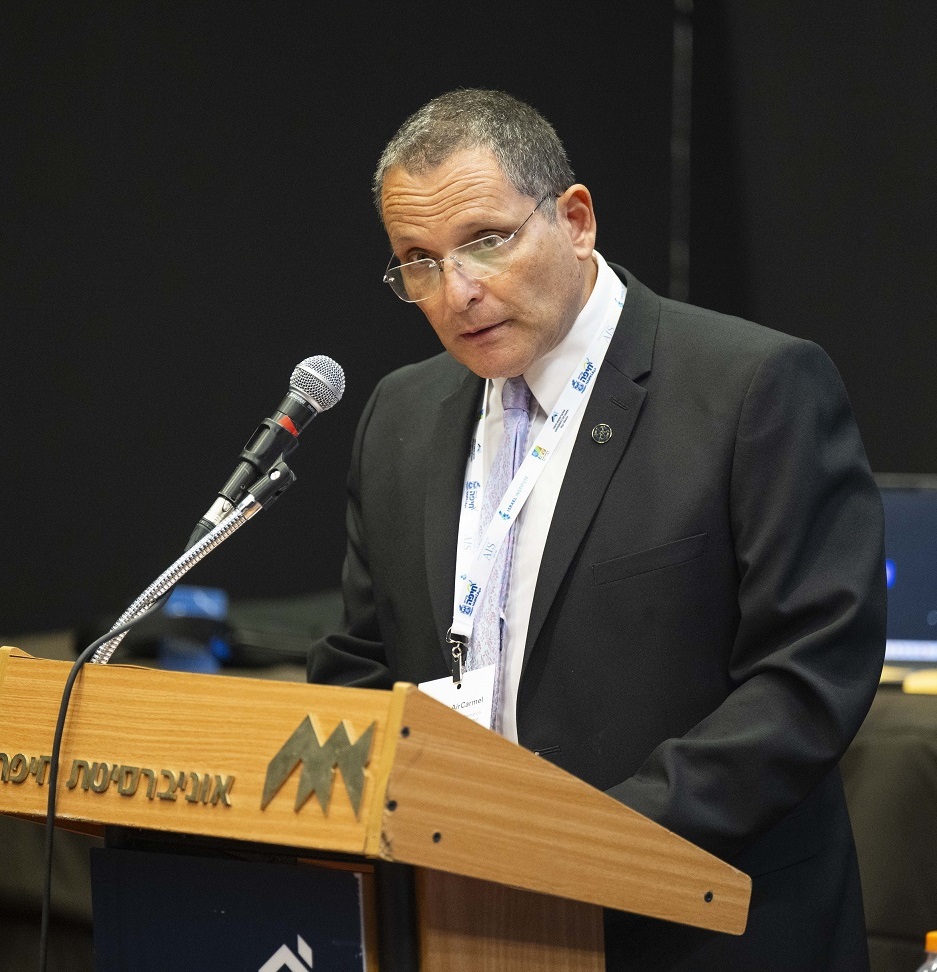 Dr. Raphael Cohen-Almagor
Professor and Senior Associate Research Fellow
Swedish Institute of International Affairs
- Published on
The devastation of Gaza demands much more than humanitarian relief. It requires a fundamentally different vision. If the post-war strategy merely restores what existed before, it will recreate the very conditions that have trapped successive generations in poverty, overcrowding, and recurring conflict.
The scale of destruction is staggering. According to the United Nations and humanitarian organisations, more than two million Palestinians have endured displacement, severe shortages of food and clean water, and the collapse of essential services. Much of Gaza’s housing, electricity, water, sanitation, and healthcare infrastructure has been destroyed or rendered inoperable. The United Nations estimates that approximately 42 million tonnes of rubble cover the territory. Clearing the debris alone could take decades, while reconstruction is expected to cost tens of billions of dollars.
For decades, Gaza has suffered from chronic structural constraints. One of the most severe is geography. With more than two million people living on a narrow coastal strip of roughly 365 square kilometres, Gaza has been among the most densely populated places in the world. Extreme population density has intensified pressure on housing, infrastructure, water resources, transport, and public services, leaving little room for sustainable economic development.
A genuine recovery strategy must therefore address not only physical destruction but also Gaza’s underlying structural limitations.
One bold, yet entirely feasible, solution lies offshore.
An international consortium comprising the United States, the European Union, the United Nations, Egypt, Saudi Arabia, the United Arab Emirates, Qatar, and other Gulf states should examine the construction of artificial islands off Gaza’s Mediterranean coast as a central component of a long-term reconstruction strategy. Artificial islands have transformed coastlines around the world.
Singapore has systematically expanded its territory through land reclamation to support industrial growth, housing, and global trade. Bahrain’s Amwaj Islands have created new residential and commercial districts. Denmark is constructing Lynetteholm, a major artificial island project off the coast of Copenhagen designed to accommodate urban expansion and to protect Copenhagen against rising sea levels. The United Arab Emirates demonstrated through Palm Jumeirah and other offshore developments how ambitious coastal engineering can reshape economic opportunities and attract international investment.
Gaza could benefit from similar innovation, adapted to its own needs and circumstances.
Artificial islands would provide something Gaza desperately lacks: space. They could accommodate modern residential neighbourhoods, universities, hospitals, research parks, commercial districts, logistics centres, renewable-energy facilities, desalination plants, wastewater treatment systems, and a deep-water commercial port. Linked securely to the mainland by bridges, tunnels, or causeways, they would enable the construction of modern infrastructure without further burdening Gaza’s already devastated and overcrowded land.
Such a project would also create tens of thousands of jobs over many years in engineering, construction, environmental management, logistics, transportation, education, tourism, and advanced services. Reconstruction could become the foundation for sustained economic growth. Prudent investment, combined with international oversight and rigorous transparency mechanisms, could transform Gaza into a model of sustainable Mediterranean development
None of this, however, can succeed without political transformation.
Infrastructure alone cannot create peace. Gaza’s future depends equally upon governance committed to economic development, the rule of law, regional cooperation, and peaceful coexistence. The international community cannot be expected to invest tens of billions of dollars unless there are credible guarantees that reconstruction will not again be sacrificed to armed conflict. This momentous project cannot be carried out under the threat of terrorism and war.
Israel has a profound interest in the success of such a vision. A prosperous, economically integrated Gaza would enhance Israel’s own long-term security far more effectively than repeated cycles of destruction and reconstruction. Stability, economic opportunity, and functioning institutions constitute stronger foundations for security than military deterrence alone.
Environmental sustainability must also be integral to the project. Artificial islands should incorporate renewable energy, advanced desalination technologies, circular water systems, green building standards, and coastal protection measures designed to address climate change and rising sea levels. Gaza has the opportunity to rebuild and become a model for resilient and environmentally responsible urban development.
The obstacles are formidable. Political agreement, security guarantees, governance reform, environmental safeguards, and sustained international cooperation would all be essential. Yet history demonstrates that transformative infrastructure projects have often emerged from moments of profound crisis. The reconstruction of post-war Europe through the Marshall Plan, the creation of modern Singapore, and the remarkable urban transformations achieved in several Gulf states all began with ambitious thinking that many initially regarded as unrealistic.
Gaza deserves more than another humanitarian rescue operation. It deserves a strategy capable of breaking the cycle of destruction and dependency that has defined its modern history. Artificial islands will not, by themselves, resolve the Israeli–Palestinian conflict. But they could provide the physical, economic, and psychological foundations upon which a different future might finally be built.
For this vision to succeed, leadership, political will, sustained international investment, and robust multilateral cooperation are indispensable. Spoilers who seek to sabotage Gaza’s reconstruction through violence, corruption, or political extremism must be firmly contained. Equally important, transparent governance and rigorous international oversight must ensure that every dollar invested is spent on rebuilding homes, schools, hospitals, and infrastructure, and not on rearming militant groups or preparing for another war. With credible leadership, regional support, and long-term international commitment, Gaza’s remarkably young population can become the architects of a different future: one defined by hard work, creativity, prosperity, and peaceful coexistence. The choice is stark: rebuild the Gaza of yesterday, or create the Gaza of tomorrow.
Disclaimer: Views expressed are of the author(s) and do not necessarily reflect the views of The Statecraft Institute.