
Stable But Incredibly Fragile: Tim Stevens On Why Cyber Risk Is More Than Hackers And Hostile States
- Author
- Published on
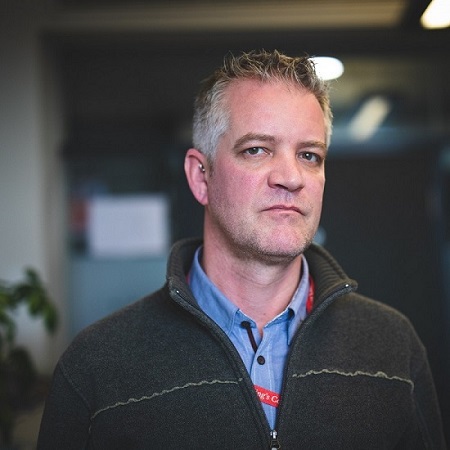
In his latest book, Cyber Risk: Managing Uncertainty in a Digital World (Bristol University Press, 2026), Dr. Tim Stevens asks what it means to depend on digital systems that are at once powerful and dangerously exposed. Professor of International Security in the Department of War Studies at King’s College London and an Associate Fellow of the Royal United Services Institute (RUSI), Professor Stevens’s work sits at the intersection of technology, politics and global security, with a particular focus on the politics and governance of cybersecurity.
Moving beyond the technical dimensions of cybersecurity, the book examines how the management of digital risk shapes politics, policy-making and everyday life. It ranges across enterprise risk management, cyber insurance, resilience and geopolitical risk, drawing on cases from corporate boardrooms to international affairs. The book is freely available open access. In this exclusive interview with TSI, Professor Stevens explores the politics of cyber risk, from insurance and resilience to state cyber operations, and what it means for the Global South.
TSI - What led you to write a book on cyber risk after your earlier work on cyber security and time? Was there a moment when you felt risk had quietly become the dominant way of thinking about cyber security?
Tim Stevens - In a sense, yes. Risk management had always been there but was increasingly the pivot around which public cyber policy revolved. I don’t think there was a specific moment; it was more of a growing awareness that security and risk were working together to tackle the multiple problems of digital transformation.
TSI - The book sets out to rescue the study of cyber risk from the “gravity well of organisational and technical CRM.” What do we miss when cyber risk is seen only as a problem for IT departments and boardrooms?
Tim Stevens - I would separate out IT departments from boardrooms. For a long time, cyber risk and cybersecurity were seen as technical issues, to be dealt with by IT departments with little representation in the boardroom. This meant that cyber risk was not mainstreamed as a business risk and therefore not given proper attention. This has certainly changed, with executives and boards much more aware not only of cyber risks themselves but also of how they affect all aspects of an organisation. More broadly, if cyber risk is only addressed as a technical risk, this omits considerations of the economic, political and social aspects of cyber risk.
TSI - Many readers in India encounter cyber security primarily through news of hacks and data breaches. For such readers, what is the most important difference between thinking in terms of threats and thinking in terms of risks?
Tim Stevens - It’s not just India, I promise you. We need to be thinking about the risks of digital transformation generally, not just about threats originating with criminals and hostile states. We are building a global information infrastructure or ecosystem, which in some ways is very stable but in others is incredibly fragile. The recent Microsoft outage is a good example of a ‘technological accident’, in which small changes cause major problems rippling out across interdependent networks and systems. The risk here emanates from the concentration of services in a small number of companies, upon whose goods and services we all rely. There is so little redundancy in many business systems, for example, that the risk is one of dependence and lack of resilience. If we only look at threats, we cannot understand the whole range of problems caused by intense digitalisation, many of which have nothing to do with hackers or ‘cyberwarfare’.
TSI - Could you offer an everyday example of how a risk is brought into being before it is managed?
Tim Stevens - Examples are all around us because all risks are constructed as risks before they can be managed. Something can exist in the world, a potential for a particular phenomenon to occur perhaps, but not be identified as a risk. The idea of risk is that those potentialities are identified and considered as risks, so that they can be brought into the ambit of risk management. A good historical example is smoking. Smoking wasn’t considered risky behaviour until researchers made the connection between smoking and adverse health outcomes. Once constructed as a risk, it could be managed through public health campaigns, regulation, and so on. The risk wasn’t eradicated but it was better understood and, to a certain extent, the risk has been managed, albeit not yet to acceptable levels.
TSI - Contemporary cyber risk practices, as you note, are less about speculative catastrophes, “but are banal, mundane and technocratic.” Why does this very ordinariness make them politically important?
Tim Stevens - They’re analytically important because they are very often not examined in any depth – that’s the academic speaking! Politically, as I hope my book indicates, cyber risk practices shape what we can and cannot do as end-users, produce economic and social effects, and drive forms of inter-state interactions through military and intelligence activities. All of this from practices that most people don’t even realise exists. They are forms of ‘quiet’ governmentality that produce political effects whether we notice them or not.
TSI - The chapter on insurance makes a striking point: rich countries “may become ‘uninsurable’” before poor ones. Could you explain this paradox and what it might mean for fast-digitising economies such as India?
Tim Stevens - The essential proposition is that hyperconnected rich countries are more susceptible to large-scale cyber risks than less-connected poorer ones. This is simply a function of higher dependence on ICTs and therefore a greater cyber risk profile. As a large-scale outage would cause greater losses in a rich country than in a poor one, it becomes harder to insure them. In insurance terms, there is a greater ‘correlated risk’ in rich countries, whereby multiple insureds would be affected simultaneously. The resulting mass claims might not be bearable by an insurer, even if they could price the risk accurately in the first place. One obvious response is to hike premiums; the other is to withdraw cover altogether.
TSI - Cyber insurance remains concentrated in the Global North. Do you see insurers moving into markets in the Global South, and would that bring better protection or new forms of dependence?
Tim Stevens - Insurers will move towards the money, like all businesses. If they can make a profit from insurance in the Global South, they will. They are slightly cautious at the moment, perceiving lower levels of security in many Global South markets. Most insurers will demand baselines of security before they offer cover, which means that organisations have to invest in security before they can buy cyber insurance. This is a challenge in many markets.
TSI - You argue that cyber “resilience is inherently pessimistic,” because it builds on the expectation of failure. Is there a way to retain the benefits of resilience without accepting permanent insecurity?
Tim Stevens - Conceptually, I would argue not. Resilience, wherever it is found, is in some sense a response to the acceptance of uncertainty and insecurity. Moreover, if responsibility for resilience is delegated to lower levels in social hierarchies, this can be politically problematic, as pointed out by many scholars of resilience. However, in a more positive light, who would not wish to be resilient? It can be, in a certain light, empowering. Therefore, I think it’s essential that people are involved in the development of resilience measures. For cyber resilience, it’s unclear to me why individuals and small companies, for example, should be made responsible for insecurities caused by the design and management decisions of global tech companies. On the flip side, if we undertake some basic security and risk management measures, we can shore up our local systems and therefore increase our overall resilience. I don’t think resilience is a binary proposition – there should be agency everywhere in the resilience assemblage.
TSI - The “whole-of-society” approach asks everyone to play a part. You also raise the question of those who cannot participate in these “activities for lack of cognitive and financial resources.” Who, in your view, should bear responsibility for protecting them?
Tim Stevens - There is no clear answer to this. Governments cannot shirk the responsibilities of the protective state because something (e.g., cyber risk management) is difficult. Nor should firms be allowed to sell insecure products as standard and ignore their own roles in increasing the safety and security of ICT use. To be fair, responsible governments and companies recognise this and try their best to protect and secure what they can. However, they cannot do everything for everyone all the time - this is not how the internet and information systems work - nor should they be expected to. But that does leave some sectors of society – and some countries – relatively exposed to cyber risks. The key is to make the digital ecosystem as easy to navigate as possible, and reduce the number of points at which users can make mistakes. None of us mean to make errors but we all do. Manufacturers in particular can design their products to limit these potential points of failure. Governments also conduct capacity-building initiatives to raise the level of security and resilience in, for example, poor countries in the Global South. These are long-term and imperfect but can help to protect vulnerable people and populations better.
TSI - In the geopolitical chapter, you warn that whole-of-society frameworks risk constructing “actors as unwilling agents of security or even war.” How real is this danger as states increasingly draw companies and civilians into cyber defence?
Tim Stevens - It changes the relationship between citizen and state. It’s a complex issue but we don’t normally reconfigure this relationship in this fashion unless we are at war. My argument is not that we shouldn’t do this in times of peace, given the nature of the problem, but that we should be aware of what we are doing and its political implications. In Europe, geopolitical discourse has shifted towards framing our current societal condition as pre-war. The point is not that this might not be the case, only that we are securitising, perhaps even militarising, citizens without their consent. The counter-argument, of course, is that we need to do this to prepare people for future events, and thereby make them more resilient. I can see both sides.
TSI - You suggest that adopting risk management as a framework for state action “in cyberspace feels both necessary and unfortunate,” with no easy escape “from this escalatory dilemma.” What would responsible conduct look like for states undertaking preventive cyber operations?
Tim Stevens - States like the UK have published their approach to responsible cyber operations, which relies on adherence to the spirit and principles of international law. We don’t know much about what this looks like in practice. I would hope that operations are conducted on the basis of necessity and proportion and with respect to the rights of civilians. Note that I have slipped into the language of international humanitarian law (jus in bello), implying at least a level of inter-state conflict that resembles ‘war’ in some aspects. On balance, I don’t think countries that are being targeted by persistent and harmful cyber operations can avoid adopting a more proactive risk management approach. The alternative is to sit back and try to absorb the actions of hostile actors, which just doesn’t work in this environment – we’re not nearly secure or resilient enough to do that; it also doesn’t help deter attackers. This is why I describe the situation as ‘unfortunate’ – we are being forced into a posture, and everything that comes with it, that is the opposite of what most of us would want.
TSI - The book is written from the vantage point of the UK, which you note “cannot be said to be representative, in politics, culture or commerce” of all societies. How might cyber risk be constructed differently in countries such as India, and what kinds of research would you particularly like to see emerging from the Global South?
Tim Stevens - I would love to see more Global South scholars looking at cyber risk (and cybersecurity) in its social and political dimensions. As the Editor-in-Chief of Journal of Cyber Policy, most submissions I see from the Global South are very technical, concerned with narrow questions of regulation or standards implementation. This has its place, of course, but there is a lot more to say about ‘cyber’ in the Global South. Since cyber risk is a sociotechnically constructed field of policy and practice, perceptions of it will differ according to what particular groups of people perceive to be of value and therefore at risk. We need Global South scholars to explore these issues more, so that they can play their part in developing nationally appropriate frameworks and also influence the global governance of cyberspace that takes into account local and regional needs and concerns.
Disclaimer: Views expressed are of the author(s) and do not necessarily reflect the views of The Statecraft Institute.