- Published on
- Commentary
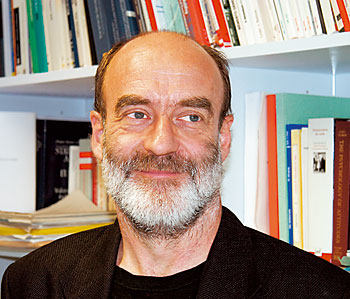
Author
Dr. Hanspeter Kriesi
Professor Emeritus
Professor Hanspeter Kriesi is an associate researcher at the Department of Political Science, University of Zurich, Switzerland. Previously, he held the prestigious Stein Rokkan Chair in Comparative Politics at the European University Institute (EUI) in Florence and also taught at the universities of Amsterdam, Geneva and Zurich. For the last six years, he has collaborated with colleagues from the EUI, the LSE and the University of Milan on European Research Council (ERC) Synergy project examining the impact of recent multiple crises on the resilience of the European Union.
A leading scholar in comparative politics, democracy, social movements and European integration, Professor Kriesi is the author/co-author of numerous acclaimed books, including Pandemic Polity-Building: How Covid-19 Shaped the European Union (Oxford University Press, 2025), Crisis Policymaking in the EU: The COVID-19 Crisis and the Refugee Crisis 2015–16 Compared (Cambridge University Press, 2025), Coming to Terms with the European Refugee Crisis (Cambridge University Press, 2024), Urban Mobilizations and New Media in Contemporary China (Ashgate Publishing, 2015), Political Conflict in Western Europe (Cambridge University Press, 2012), West European Politics in the Age of Globalization (Cambridge University Press, 2008), and Direct Democratic Choice: The Swiss Experience (Lexington Books, 2008). He also co-edited the influential Wiley Blackwell Companion to Social Movements (Wiley-Blackwell).
Publications by Dr. Hanspeter Kriesi
- Published on
- Commentary
Democratic erosion in Europe from 2010 onwards is characterized by cases in Hungary and Poland. Illiberal regimes took office because of favourable institutional arrangements, political scandals and economic recessions. After taking office, they redesigned the democratic system to consolidate their power. This commentary contends that populism alone does not explain democratic decline in Europe.